 中央研究院 生物化學研究所
中央研究院 生物化學研究所
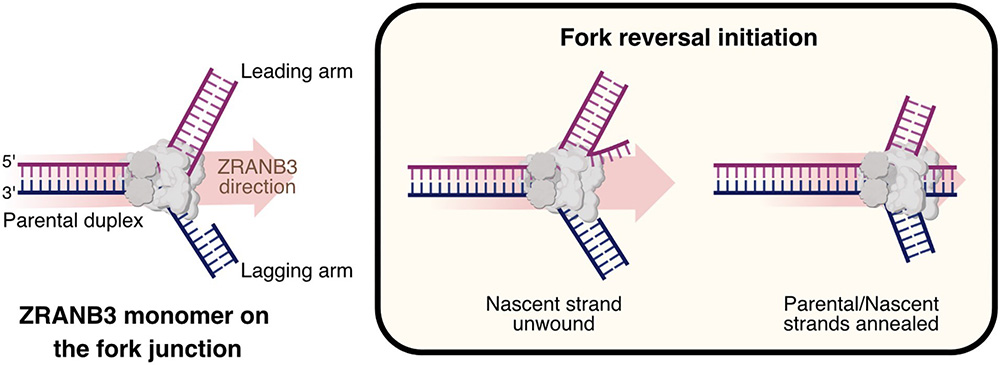
Replication fork reversal is a central response to replication stress, yet how a SNF2 translocase coordinates the distinct mechanical steps required for this reaction remains elusive. Here, we define the mechanism by which ZRANB3 catalyzes fork reversal using biochemical, biophysical, and single-molecule approaches. ZRANB3 binds fork DNA as a monomer at the junction, establishing the minimal functional unit required for activity. Mechanistically, ZRANB3 combines ATP-dependent localized duplex opening with ATP-independent strand annealing to facilitate four-way junction formation, followed by directional branch migration that supports long-range fork reversal. Single-molecule fluorescence analyses further demonstrate that monomeric ZRANB3 is sufficient to drive fork reversal. Together, these findings define how ZRANB3 integrates distinct DNA remodeling activities within a single enzyme to catalyze fork reversal.